
QUICK ANSWER
- Why is my outdoor outlet not working? An outdoor outlet that isn’t working is most often caused by a tripped GFCI outlet, which may be located in a garage, bathroom, or another nearby area. Other common causes include a tripped circuit breaker, moisture, or a faulty outlet.
- The most common cause: A tripped GFCI. Because one GFCI can protect a whole chain of outlets, the reset button may be indoors or on another exterior wall, not on the dead outlet itself.
- The fast fix: Find and press the GFCI reset button, then check your breaker panel for a tripped breaker. This solves most dead outdoor outlets in a couple of minutes.
- When to call a pro: If the GFCI will not reset, trips again immediately, or you see scorching, moisture, or smell anything hot, stop and call a licensed electrician.
What Makes an Outdoor Outlet Suddenly Stop Working?
When an outdoor outlet goes dead, it is almost always one of four things: a tripped GFCI, a tripped breaker, moisture in the outlet, or a loose or worn connection. The reassuring part is that the most common cause is also the easiest and cheapest to fix, and you can usually work through the possibilities in a few minutes with no tools. The key is to check them in the right order, from the safest and most likely to the ones that call for a licensed electrician.
The most common issue we see homeowners run into is not actually a broken outlet at all. It is a tripped GFCI whose reset button is somewhere they did not think to look. Before you assume the worst, or spend money on a replacement you may not need, walk through the steps below in order. In Central Florida especially, where afternoon storms and humidity are constant, the cause is very often moisture-related and completely fixable.
How Do I Reset a GFCI Outlet That Isn’t Working?
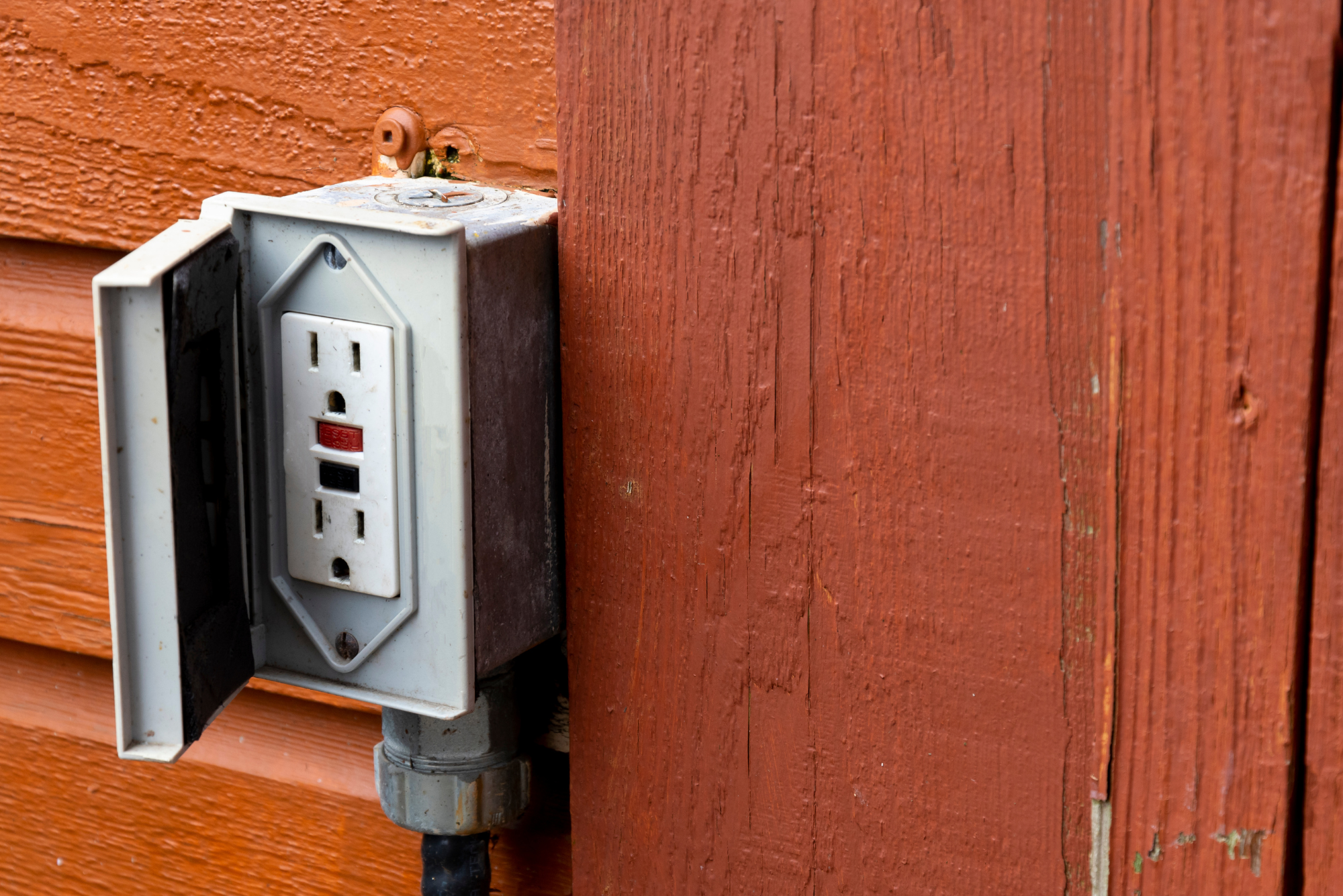
To reset a GFCI, find the outlet with Test and Reset buttons, which may be on the dead outlet, in the garage, in a bathroom, or on another exterior wall, and press Reset firmly until it clicks. One GFCI can control a whole chain of outlets, so resetting the right one often restores several dead plugs at once.
Outdoor outlets are required by the National Electrical Code to be GFCI protected, because a Ground Fault Circuit Interrupter shuts off power the instant it senses current leaking to ground, which is exactly what water and outdoor conditions can trigger. When a GFCI trips, everything downstream of it goes dead until someone presses Reset.
The catch that trips up most people is that the GFCI protecting your outdoor outlet may not be the outdoor outlet itself. Because a single GFCI can protect a string of outlets wired after it, the reset button you need might be in the garage, a bathroom, the laundry room, or on a different outside wall entirely. In our experience running these calls, this is the single most common reason a homeowner thinks an outlet is broken when it simply needs a reset somewhere else. Here is the order to check:
- Press Reset on the dead outdoor outlet itself, if it has the buttons.
- Check other outdoor outlets on the same and adjacent walls.
- Check the garage, which very commonly holds the controlling GFCI.
- Check nearby bathrooms and the laundry area.
- If you find a tripped GFCI, press Reset firmly and recheck the outdoor outlet.
If pressing Reset restores power and it holds, you are done. If it will not reset, or it trips again immediately, treat that as a possible fault and move on rather than forcing it repeatedly.
What If the Breaker, Not the GFCI, Is the Problem?
If several outlets are out at once, not just one, check your electrical panel for a breaker that has moved to the middle or Off position. Switch it fully Off, then back On, and recheck the outdoor outlet. A breaker that trips again right away signals an overload or short that needs to be diagnosed, not repeatedly reset.
Circuit breakers protect the whole circuit from overloads and short circuits, so a tripped breaker will take out every outlet and fixture on that run. Resetting once is fine. But if the breaker refuses to stay on, or trips again within seconds, that is the system telling you something is wrong downstream, whether a faulty device plugged in outside, a damaged wire, or water in a box. One thing we tell every homeowner is that a breaker that keeps tripping is doing its job, and the answer is to find the cause, not to keep flipping the switch.
Why Does My Outdoor Outlet Stop Working When It Rains?
An outdoor outlet that dies during or after rain almost always has a moisture problem. Water reaching the receptacle causes the GFCI to trip, and it will keep tripping until the outlet dries out and the source of the water intrusion is fixed. This is the most common outdoor-outlet call we see in Central Florida’s storm season.
Moisture protection comes down to two things the code requires, and both are worth checking:
- Use an in-use (bubble) cover. Outdoor receptacles that stay in use need a bubble-style cover that keeps rain out even while a cord is plugged in, not just a flat flip-lid that only closes when empty.
- Confirm a weather-resistant receptacle. Outdoor outlets should be weather-resistant (WR) rated. An older, non-WR outlet exposed to the elements fails far sooner.
- Look for standing water or condensation. A damp box, fogged cover, or an outlet that trips every time it rains points squarely at water intrusion.
- Check the gasket and seal. A cracked cover or a missing foam gasket behind the faceplate lets water straight into the box.
The Electrical Safety Foundation International (ESFI) notes that outdoor outlets need both GFCI protection and weatherproof, in-use covers to be safe in wet locations. If your outlet only fails when the weather turns, upgrading the cover and confirming a WR receptacle usually solves it for good.
A GFCI that keeps tripping after rain usually means water is getting into the box or the outlet has failed, and that is worth fixing before it becomes a shock hazard. Super Fast Electric repairs and weatherproofs outdoor outlets across Central Florida.
Could the Outlet Itself Be Loose or Faulty?
If the GFCI and breaker are fine but the outlet is still dead, the problem may be inside the outlet itself: a loose wire, a worn receptacle, or a failed back-stab connection where the wire simply pushes into the back of the device. These connections loosen over time and with temperature swings, and a loose connection is not just a dead-outlet nuisance, it generates heat and can arc.
Inspecting this means working inside the box, so only attempt it if you are comfortable and have switched off the power at the breaker first. Signs the outlet needs replacing include burn marks or discoloration on the face, cracks in the housing, a loose or wobbly faceplate, or a receptacle that no longer grips a plug snugly. Any scorching, melting, or a burning smell means stop immediately and call an electrician, because that points to heat and possible arcing behind the wall. Across the outdoor-outlet repairs our team handles, worn back-stab connections and weather-damaged receptacles are the two failures we replace most often.
Outdoor Outlet Troubleshooting: Symptom, Cause, and Fix
Use this quick diagnostic to match what you are seeing to the most likely cause and the right next step. It follows the same order a licensed electrician would work through on a service call.
| Symptom | Most likely cause | What to do |
| One outlet dead, others fine | Tripped GFCI (on this or a linked outlet) | Find and press the GFCI reset, including garage and bathrooms |
| Several outlets or fixtures dead | Tripped breaker | Reset the breaker once; if it re-trips, call a pro |
| Dies or trips only when it rains | Moisture intrusion or missing in-use cover | Add a WR outlet and bubble cover; dry out and reseal the box |
| Will not reset, or re-trips instantly | Wiring fault or failed device | Stop and call a licensed electrician |
| Burn marks, heat, or burning smell | Arcing or a failing connection | Shut off the breaker and call an electrician now |
When Should You Call a Licensed Electrician?
Call a professional when the GFCI will not reset or trips repeatedly, the breaker re-trips immediately, you see burn marks or moisture, you smell anything hot, or multiple outlets are out with no obvious cause. These point to wiring faults, water intrusion, or circuit problems that are not safe to keep resetting.
The reset-and-check steps above resolve the large majority of dead outdoor outlets, and there is no harm in working through them. But once you are past a simple reset, outdoor electrical work involves GFCI protection, weatherproofing, and wiring that has to be done correctly and to code to be safe. If the wiring needs to be traced or a device is failing, our electrical repair services cover exactly this, and a full home electrical safety inspection is the right call when outlets are failing in more than one spot, since that often signals an issue upstream of any single receptacle.
Frequently Asked Questions
How do I know if my outdoor outlet is GFCI protected?
A GFCI outlet has Test and Reset buttons on its face. If your outdoor outlet has them, it is GFCI protected. If it does not, it may still be protected by a GFCI elsewhere on the circuit, such as in the garage or a bathroom, or by a GFCI breaker in your panel.
My outdoor outlet isn’t working, but the breaker isn’t tripped. What should I do?
Check for a tripped GFCI first, including outlets in the garage, bathrooms, and other exterior walls, since one GFCI can control several. If nothing resets and the breaker is fine, there may be a loose wire or a failed outlet, which is best handled by a licensed electrician.
What causes a GFCI outlet to trip?
A GFCI trips when it detects current leaking to ground. Outdoors, the usual causes are moisture in the outlet or box, rain reaching an uncovered plug, a damaged cord, or a faulty appliance. Repeated tripping after rain almost always points to water intrusion.
Why does my outdoor outlet only stop working when it rains?
That is moisture reaching the receptacle. It usually means the outlet lacks a proper in-use cover, is not a weather-resistant type, or water is getting into the box. Replacing the cover or the outlet with weatherproof versions typically solves it.
Can I replace an outdoor outlet myself?
Simple swaps are possible if you are experienced and shut off the power first. But outdoor outlets involve GFCI protection and weatherproofing that must be done correctly and to code, so for anything beyond a basic reset, or if you see damage, it is safest to call a professional.
How much does it cost to fix an outdoor outlet?
Pricing typically varies from $50-$400+ depending on the cause of the issue. A basic outlet or cover replacement is a small, quick job, while tracing a wiring fault or water intrusion costs more because it takes diagnosis. The best way to get an accurate price is to schedule a quote with a trusted electrician. At Super Fast Electric one of our electricians will diagnose the outlet and provide you with a price for repair.
Next Steps
Start with the GFCI reset, remembering the button may be on another outlet, then check the breaker, then look for moisture and a proper weatherproof cover. Those three steps restore power in most cases. When the outlet will not reset, keeps tripping, or shows any sign of heat or water damage, that is your cue to bring in a licensed electrician before it becomes a safety issue.
Super Fast Electric is Central Florida’s trusted, licensed electrical contractor, with 800-plus five-star Google reviews. If your outdoor outlet keeps failing or you spot any warning signs, we will find the cause and fix it safely and fast.