
Why Were Galanz Retro Refrigerators Recalled?
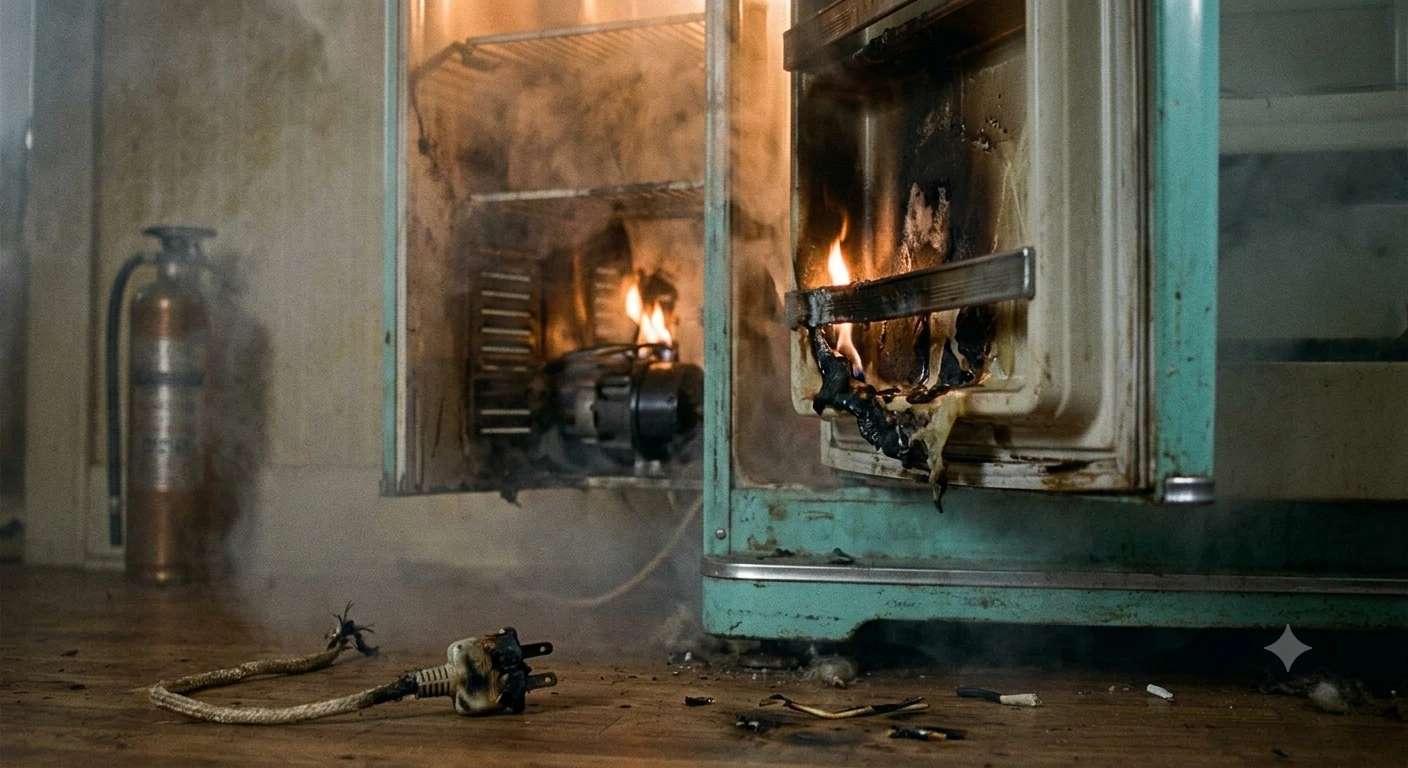
As of July 30, 2026, the U.S. Consumer Product Safety Commission recalled approximately 121,680 Galanz retro-style refrigerators after determining that internal electrical components can short circuit and ignite, creating a fire and burn hazard. One death has been reported in connection with this defect. The recalled models were sold at major retailers including Walmart and Amazon between January 2020 and August 2025, and consumers are urged to stop using them immediately until a qualified technician completes a free in-home repair.
What is affected: Galanz retro refrigerators with model numbers starting with GLR, sold in multiple sizes and colors. The model number and date code are printed on a white label on the back of the unit.
What to do now: Unplug the refrigerator immediately and contact Galanz at 888-462-0579 to schedule a free in-home repair.
The bigger picture: Appliance electrical fires are among the leading causes of home fires in the United States, and a recalled product is only one of several electrical fire risks in a typical home.
What Happened With the Galanz Recall
On July 30, 2026, the CPSC published a recall notice for approximately 121,680 Galanz retro-style refrigerators sold in the United States. The defect involves internal electrical components that can short circuit and catch fire. One consumer death has been reported in connection with the recalled units.
The recall covers multiple Galanz retro refrigerator models with model numbers beginning with GLR, sold at Walmart, Amazon, and other retailers between approximately January 2020 and August 2025. The affected units come in several sizes and color options. Consumers can identify whether their refrigerator is part of the recall by checking the white label on the upper left corner of the back panel, which shows the model number and a date code in YYYYMM format.
This recall is not an isolated event. In the same week, the CPSC also issued a recall for approximately 178,000 OCTROT heated electric blankets and throws after receiving 555 reports of melting, sparking, or smoking, including 27 fires and 15 burn or shock injuries. The pattern is clear: electrical products with internal wiring defects are a persistent and serious fire risk in American homes, and the recalls often come after years of the product being in use.
We respond to emergency calls across 20 Central Florida cities, and appliance-related electrical issues are among the calls we get most frequently. A refrigerator that shorts internally can trip a breaker, but if the breaker is old, damaged, or the wrong amperage, it may not trip fast enough to prevent a fire. That is why the product recall alone does not solve the full problem.
How Do Appliance Electrical Fires Start?
An appliance electrical fire starts when a wiring defect, loose connection, or component failure inside the appliance creates an arc or a short circuit that generates enough heat to ignite surrounding materials. In the case of the Galanz recall, internal electrical components can short circuit and produce a flame, which can spread to the plastic housing of the refrigerator and then to nearby cabinets, walls, or flooring.
What makes appliance fires particularly dangerous is that they often start behind or inside the unit where nobody can see them. A refrigerator runs 24 hours a day, seven days a week. If an internal fault develops at 3 a.m., the fire can grow substantially before a smoke detector activates or anyone notices.
The National Fire Protection Association reports that electrical distribution and lighting equipment is the second leading cause of home fires in the United States. Within that category, appliance wiring and component failures account for a significant share of incidents. Refrigerators, dishwashers, dryers, and HVAC systems are the most common culprits because they draw continuous or high-amperage power and their internal wiring degrades over time.
The electrical system in your home is the last line of defense when an appliance fails internally. A properly rated circuit breaker should trip before a short circuit generates enough heat to start a fire. A whole-home surge protector should absorb the voltage spike that can damage appliance electronics in the first place. An arc fault circuit interrupter (AFCI) breaker detects the kind of arcing that precedes many electrical fires and shuts the circuit down. If your home has none of these protections, you are relying entirely on the appliance not to fail, and the Galanz recall demonstrates how that can end.
How to Protect Your Home From Appliance Electrical Fires
The Galanz recall is a reminder that the product is only half the equation. The other half is your home’s electrical system. Here are the steps that actually reduce your risk.
1. Check the CPSC recall list for every major appliance in your home. Visit cpsc.gov/Recalls and search by product type. If any appliance you own is listed, follow the recall instructions immediately. Do not continue using a recalled product while waiting for a repair kit or replacement.
2. Install whole-home surge protection at your electrical panel. A whole-home surge protector prevents voltage spikes from damaging appliance electronics and wiring. In Central Florida, where lightning strikes are among the most frequent in the country, surge protection is not optional. It is a baseline. We install surge protection systems that protect every circuit in the home from a single device at the panel.
3. Upgrade to AFCI breakers on circuits serving major appliances. Arc fault circuit interrupters detect the specific type of electrical arcing that precedes many fires and shut the circuit down before ignition. The National Electrical Code has been expanding AFCI requirements with each edition, and homes built before 2014 likely do not have them on most circuits.
4. Schedule a home electrical safety inspection. A licensed electrician inspects your panel, wiring, outlets, grounding system, and surge protection to identify hazards that are invisible to homeowners. Our inspections start at $197 and typically take two to four hours. The report is delivered electronically, usually before we leave the house.
5. Replace any electrical panel older than 25 years. Breaker panels are designed to last 25 to 30 years. Beyond that, breakers can fail to trip when they should, connections loosen, and the panel becomes a fire risk itself. If your panel is older than your car, it is time for an electrical panel evaluation.
6. Stop using extension cords as permanent power sources. Extension cords are designed for temporary use. Running a refrigerator, space heater, or any high-draw appliance on an extension cord increases the fire risk significantly because the cord may not be rated for the continuous amperage the appliance draws.
A recalled appliance is one risk. An aging panel, missing surge protection, and circuits without arc fault protection are risks that no product recall will fix. If your home has not had an electrical safety inspection, now is the time. Our inspections start at $197 and cover your panel, wiring, outlets, grounding, and surge protection.
What an Electrical Inspection Catches
A home electrical safety inspection is not a product recall check. It is a comprehensive evaluation of the systems that protect your home when an appliance or wiring component fails. Here is what our inspectors look for and why each item matters in the context of appliance fire prevention.
| Inspection Item | Why It Matters | Common Finding |
|---|---|---|
| Panel condition | A failing panel may not trip when an appliance shorts | Overheating, corrosion, oversized breakers on undersized wire |
| Surge protection | Prevents voltage spikes from damaging appliance internals | No whole-home surge protector installed; only power strip level |
| GFCI and AFCI protection | Detects ground faults and arcing before they cause fire or shock | Missing AFCI protection on bedroom and kitchen circuits |
| Grounding system | Proper grounding directs fault current safely to earth | Ungrounded outlets, missing or corroded ground rods |
| Outlet and connection condition | Loose or damaged outlets create heat and arcing | Warm outlets, discolored cover plates, loose receptacles |
One real example from our work in Central Florida: a buyer in Oviedo hired us for a pre-purchase electrical inspection. The general home inspector had given the home a mostly clean bill of health with minor concerns, but our inspection discovered significant overheating damage to the main breaker panel. The house was only about 12 years old, but something had caused the panel to overheat badly enough that it needed a full replacement before the new owners could safely move in. That is the kind of hazard that a recalled appliance plugged into a compromised panel turns into a fire.
Why Central Florida Homes Face Higher Risk
Central Florida’s climate and weather patterns create specific electrical risks that compound the danger from a defective appliance.
Lightning frequency is the first factor. Central Florida trades the title of lightning capital of the world with only one other location on the planet. Frequent lightning strikes send voltage surges through the grid that degrade appliance electronics, weaken wiring insulation, and can damage breakers over time. Every home in the region should have whole-home surge protection at minimum, and a properly designed grounding system to work alongside it.
Humidity is the second factor. Moisture continuously gets into outdoor receptacles and indoor panels alike, causing connections to corrode and fail prematurely. A panel that looks fine from the outside may have corroded bus bars or loose connections inside that reduce its ability to trip when an appliance shorts.
Storm-related power cycling is the third factor. Hurricanes and severe thunderstorms cause repeated power outages and restorations. Each restoration event sends a voltage surge through the grid. Without surge protection, these surges accumulate damage to appliance wiring and electronics, exactly the kind of degradation that leads to the internal short circuits described in the Galanz recall.
We service approximately 3,000 homes per year across 20 Central Florida cities, and the combination of lightning, humidity, and storm cycling creates electrical conditions that are measurably harder on both homes and appliances than what homeowners in less storm-prone regions face. That is why the standard advice of “just unplug it” only addresses part of the problem.
Frequently Asked Questions
Is my Galanz refrigerator part of the recall?
Check the white label on the upper left corner of the back panel. If the model number starts with GLR and the unit was purchased between January 2020 and August 2025, it is likely included in the recall. Contact Galanz at 888-462-0579 or visit GalanzRetroFridgeRecall.expertinquiry.com to confirm and schedule a free in-home repair.
Should I unplug my recalled refrigerator immediately?
Yes. The CPSC instructs consumers to unplug and stop using recalled Galanz refrigerators immediately until a qualified technician completes the repair. Transfer perishable food to another refrigerator or cooler. A short circuit fire can start at any time while the unit is plugged in, including while you are asleep or away from home.
Can a surge protector prevent an appliance fire?
A whole-home surge protector prevents voltage spikes from damaging appliance electronics and wiring, which reduces the chance of a defect developing over time. However, it cannot fix a defect that already exists inside a recalled product. Surge protection is a preventive layer, not a remedy for a product that has already been recalled.
How much does a home electrical safety inspection cost?
At Super Fast Electric, home electrical safety inspections start at $197 for standard homes and take two to four hours to complete. Homes over 3,500 square feet move to a higher tier due to additional items to inspect. The report is delivered electronically, typically before the inspector leaves the property.
What is an AFCI breaker and do I need one?
An arc fault circuit interrupter detects electrical arcing, the type of spark that often precedes a fire, and shuts down the circuit before ignition. The National Electrical Code requires AFCI protection on most living area circuits in new construction. Homes built before 2014 likely do not have AFCI protection on most circuits and can be upgraded by a licensed electrician.
How often should I have my electrical system inspected?
The general recommendation is every three to five years for homes with no known issues, and annually for homes older than 30 years or homes with aluminum wiring, older panels, or a history of electrical problems. A pre-purchase inspection is recommended whenever buying a home, regardless of the home’s age.
Next Steps
Check the CPSC recall database at cpsc.gov/Recalls for every major appliance in your home, starting with the Galanz retro refrigerator recall published July 30, 2026.
If your home has not had an electrical safety inspection, or if your panel is more than 25 years old, schedule one before hurricane season intensifies.
For Central Florida homeowners, Super Fast Electric serves 20 cities across the region with licensed Master Electricians, inspections starting at $197, and warranties up to 10 years.
A recalled product is one fire risk. An aging panel, missing surge protection, and circuits without arc fault protection are risks hiding inside your walls. Super Fast Electric has completed over 20,000 electrical service calls across Central Florida since 2017, with 800+ five-star Google reviews and a 100% satisfaction guarantee. Get your home’s electrical system inspected before the next problem finds you.