
When Does an Electrical Panel Need Upgrading?
An electrical panel upgrade replaces your home’s breaker box with a new panel that can safely handle your current and future electrical load. Most Central Florida homes built before 2000 have 100-amp or 150-amp panels that were sized for a lighter electrical footprint than today’s appliances, EV chargers, and HVAC systems demand. When the panel cannot keep up, the symptoms show up as tripped breakers, flickering lights, warm panel covers, and in some cases, a home insurance policy that will not renew.
Age is the first signal. Panels over 25 years old, especially Federal Pacific, Zinsco, and certain Challenger models, are considered safety risks and are flagged by home inspectors and insurance carriers.
Capacity decides the scope. A 100-amp panel serving a home with central AC, an electric range, a pool pump, and an EV charger is undersized. Most modern homes need 200 amps, and some need 320 or 400.
Code may require it. Florida Building Code requires electrical systems to meet current standards when a homeowner pulls a permit for a renovation, addition, or major appliance installation.
Signs Your Panel Needs an Upgrade
Not every electrical problem points to the panel, but several patterns do. These are the ones our electricians see most often on service calls across Central Florida.
Breakers trip repeatedly. A breaker that trips once is doing its job. A breaker that trips weekly on the same circuit is telling you the circuit is overloaded or the breaker itself is failing.
The panel cover is warm to the touch. Heat at the panel means a connection is loose or a breaker is working harder than it should. This is not something to monitor; it is something to address immediately.
You are running out of breaker slots. A full panel with no room for additional circuits means every new appliance or outlet requires creative workarounds that reduce safety margins.
The panel uses fuses instead of breakers. Fuse panels are not inherently dangerous, but they are outdated, harder to insure, and not designed for the electrical loads modern homes carry.
Your insurance company flags the panel. Several Florida insurers will not write or renew a policy on a home with a Federal Pacific Stab-Lok, Zinsco, or certain Challenger panel. The upgrade is not optional in that case.
You are adding a major load. An EV charger (typically 40 to 50 amps), a hot tub, a pool heater, or a whole-house generator may exceed your existing panel’s capacity.
What Does an Electrical Panel Upgrade Involve?
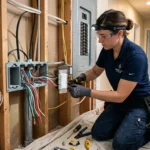
A panel upgrade is not a quick swap. It is a licensed, permitted job that touches the meter, the main breaker, every circuit in the house, and the utility connection. Here is what the process looks like when we do it.
Assessment. We evaluate your current panel, measure the load on each circuit, check the service entrance cable, and determine whether the upgrade requires a meter base change or a utility coordination.
Permitting. Florida requires an electrical permit for panel upgrades. We pull the permit, schedule the inspection, and handle the utility coordination so the homeowner does not have to navigate the process.
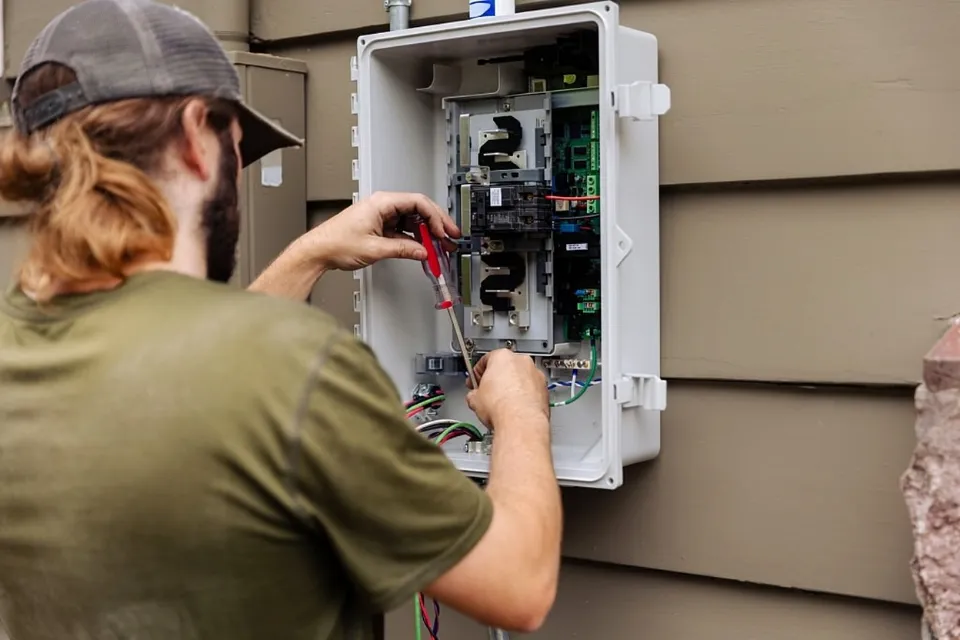
Panel installation. The old panel is removed and the new panel is mounted, wired, and labeled. Every circuit is landed on the correct breaker, and arc-fault and ground-fault protection is added where current code requires it.
Inspection and utility reconnection. The county or city inspector verifies the work meets Florida Building Code, and the utility reconnects the service. Most panel upgrades are completed in one day.
Panel Upgrade Options and Typical Costs
The cost of an electrical panel upgrade in Central Florida depends on the amperage, whether the meter base and service entrance need replacement, and the condition of the existing wiring.
| Upgrade type | Typical capacity | Typical cost range | Common reason |
|---|---|---|---|
| Panel swap (same amperage) | 100 or 200 amp | $1,500 to $2,500 | Recalled panel, insurance requirement |
| 100 to 200 amp upgrade | 200 amp | $2,500 to $4,500 | Added load, EV charger, renovation |
| 200 to 320/400 amp upgrade | 320 or 400 amp | $4,500 to $7,000+ | Large home, pool, generator, shop |
| Meter base + panel upgrade | 200 amp | $3,000 to $5,500 | Older service entrance, utility requirement |
Costs vary by municipality, utility requirements, and the condition of existing wiring. A licensed electrician should assess the full scope before quoting.
Not sure whether your panel needs an upgrade or just a repair? Our licensed electricians assess your panel, pull the permit, and complete most upgrades in one day. Get a no-obligation quote.
Recalled and Flagged Panels in Central Florida
Certain panel brands installed in Florida homes from the 1960s through the 1990s are considered safety risks. Insurance companies, home inspectors, and electricians flag these panels because they have documented failure rates that exceed industry standards.
Federal Pacific Stab-Lok. These panels have a documented history of breakers failing to trip during overcurrent conditions. Multiple studies found failure rates significantly above acceptable levels. Most Florida insurers will not write a policy on a home with a Federal Pacific panel.
Zinsco (GTE-Sylvania). Zinsco breakers are known to fuse to the bus bar, preventing them from tripping when they should. Overheating and arcing are common failure modes.
Certain Challenger panels. Some Challenger panels and breakers were recalled. If your panel carries the Challenger label, have it inspected to determine whether it is an affected model.
If your home has one of these panels, the upgrade is not a matter of when but how soon. We have replaced hundreds of Federal Pacific and Zinsco panels across Central Florida, and most are completed in a single day with same-day utility reconnection.
Do You Need a Permit for a Panel Upgrade in Florida?
Yes. Florida Building Code requires an electrical permit for panel upgrades, and the work must be performed by a licensed electrical contractor. The permit process includes submitting the scope of work to the local building department, scheduling an inspection after installation, and coordinating with the utility for the meter disconnect and reconnect.
Skipping the permit creates two problems. First, unpermitted electrical work is a code violation that can complicate a future home sale or insurance claim. Second, the work does not get inspected, which means nobody independent verifies that the installation is safe. We handle permitting and inspection scheduling as part of every panel upgrade so the homeowner does not have to navigate the process themselves.
Frequently Asked Questions
How long does an electrical panel upgrade take?
Most residential panel upgrades are completed in one day, including the old panel removal, new panel installation, circuit landing, and inspection. Larger projects that involve a service entrance upgrade or utility coordination may extend to two days.
How much does a 200-amp panel upgrade cost in Central Florida?
A typical 100-to-200-amp panel upgrade in Central Florida ranges from $2,500 to $4,500, depending on whether the meter base needs replacement, the condition of existing wiring, and local permit fees. A licensed electrician should assess the scope before providing a final quote.
Will my insurance require a panel upgrade?
Possibly. Several Florida home insurance carriers will not write or renew policies on homes with Federal Pacific Stab-Lok, Zinsco, or certain Challenger panels. If your insurer flags the panel, the upgrade is required to maintain coverage.
Do I need a panel upgrade for an EV charger?
It depends on your current panel’s capacity and available breaker slots. A Level 2 EV charger typically requires a 40 to 50-amp dedicated circuit. If your panel is already near capacity, a 200-amp upgrade may be needed before the charger can be installed.
Can I upgrade my electrical panel myself?
No. Florida requires all electrical panel work to be performed by a licensed electrical contractor and inspected by the local building department. Panel upgrades involve working with live utility power and are not a DIY project.
What is the difference between a panel upgrade and a panel replacement?
A panel replacement swaps the existing panel for a new one at the same amperage, typically to replace a recalled or failing unit. A panel upgrade increases the amperage capacity, usually from 100 to 200 amps, to handle a larger electrical load.
Whether your panel is flagged by insurance, tripping breakers on a busy morning, or simply out of room for the circuits you need, Super Fast Electric handles the full upgrade: assessment, permit, installation, inspection, and utility coordination, typically in one day. Licensed Florida electrical contractor EC13013514, rated 4.9 stars on Google with 800+ reviews. Get a free, no-obligation quote.