
What is the September 2026 Amana air conditioner recall?
As of September 3, 2026, the U.S. Consumer Product Safety Commission recalled approximately 4,633 Amana brand through-the-wall air conditioners and heat pumps manufactured by Daikin Comfort Technologies because the snubber circuit on the control board can short-circuit and emit flames, posing a fire hazard. The recall covers five models with numbers beginning with PB, sold nationwide from April 2025 through June 2026 for $625 to $900. Consumers should stop using the recalled units immediately and contact Daikin for a full refund.
- What is affected. Amana through-the-wall air conditioners and heat pumps with model numbers PBC092J00AA, PBC093J00AA, PBC122J00AA, PBC123J00AA, and PBH092J12AA.
- What the hazard is. The snubber circuit on the control board can short and emit flames. CPSC has received two reports of shorting incidents. No injuries have been reported.
- What to do now. Stop using the unit immediately. Contact Daikin at 833-730-0939 or visit amana-ptac.com/amana-ttw-wrac-recall-2 to submit a refund request. You will need to cut the power cord and upload a photo.
Which Amana Models Are Recalled?
The September 3, 2026, CPSC recall covers five specific model numbers, all through-the-wall (TTW) units manufactured by Daikin Comfort Technologies under the Amana brand. These units are commonly installed in hotels, apartment buildings, assisted living facilities, and commercial office spaces where individual room climate control is needed.
| Model number | Type | Sale period | Price range |
|---|---|---|---|
| PBC092J00AA | Air conditioner | April 2025 to June 2026 | $625 to $900 |
| PBC093J00AA | Air conditioner | April 2025 to June 2026 | $625 to $900 |
| PBC122J00AA | Air conditioner | April 2025 to June 2026 | $625 to $900 |
| PBC123J00AA | Air conditioner | April 2025 to June 2026 | $625 to $900 |
| PBH092J12AA | Heat pump | April 2025 to June 2026 | $625 to $900 |
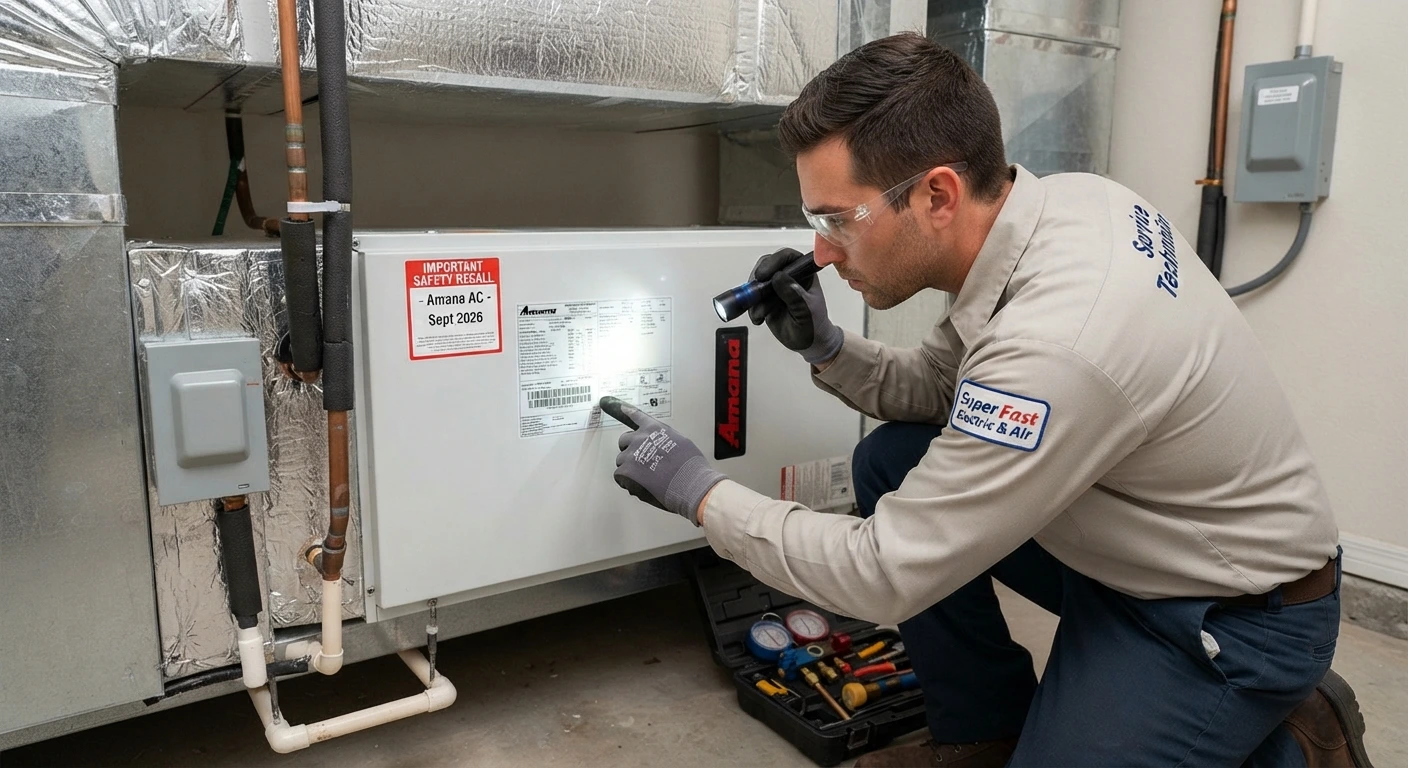
The model number and serial number are located on a white sticker on the front edge of the base pan, at the bottom front of the unit. The units are white and have the Amana brand name printed on the control cover. This recall is separate from earlier Amana recalls that covered different product lines including packaged terminal air conditioners (PTACs) with DigiAir modules and packaged units with incorrect electrical ratings. If you have an Amana through-the-wall unit, check the model number on the base pan sticker before assuming it is not affected.
The practical concern for property owners in Central Florida is that these units are often installed in volume. A hotel or apartment building may have dozens or hundreds of through-the-wall units from the same purchase cycle. If one model in the building matches the recall, every unit with that model number must be taken out of service immediately, not just the ones showing visible problems. The recall is based on the component, not on whether the specific unit has shorted yet. This is the same pattern we saw with the Galanz refrigerator recall earlier this year, where the fire risk was in the component, not in symptoms the owner could see.
Why Is This Recall Serious for Property Owners?
Through-the-wall air conditioners and heat pumps run on dedicated electrical circuits, typically 208/230-volt, 20 or 30-amp circuits hardwired or connected through a NEMA 6-20 or 6-30 receptacle. When a component inside the unit shorts and emits flames, the fire risk is not contained to the appliance. It can reach the wall sleeve, the surrounding insulation, and the building structure. In a multi-unit property where these units sit inside wall openings, a fire in one unit can spread to adjacent units through the shared wall cavity.
CPSC has received two reports of the snubber circuit shorting on these specific models. No injuries have been reported, but the recall was issued because the failure mode produces open flame, not just overheating. That is a higher severity classification than a typical appliance recall. The agency is not asking for a repair. It is asking consumers to stop using the product immediately and apply for a full refund, which signals the level of risk involved.
For hotel operators and property managers in Orange, Seminole, and Osceola counties, the electrical response goes beyond unplugging the unit. If the snubber circuit shorted before the recall was announced, the wiring inside the wall sleeve and the circuit feeding the unit may have sustained heat damage that is not visible without pulling the unit and inspecting behind it. We recommend a home electrical safety inspection or a commercial inspection of the circuit and wall sleeve before installing a replacement unit.
If your property has Amana through-the-wall units from the recalled model range, the next step after unplugging is an electrical inspection of the wall sleeve and the circuit. A shorted control board can damage wiring that you cannot see from outside the wall. Super Fast Electric inspects and repairs the electrical infrastructure behind recalled appliances across Central Florida. Same-day and next-day appointments available.
What Should You Do If You Have a Recalled Unit?
The CPSC and Daikin have laid out a specific process for this recall. Follow it exactly to qualify for the full refund and to eliminate the fire risk.
- Stop using the unit immediately. Turn it off at the thermostat and disconnect it from the electrical supply. If the unit is hardwired, switch off the dedicated breaker in the panel and label it.
- Verify the model number. Check the white sticker on the front edge of the base pan at the bottom of the unit. The recalled models all begin with PB. If the model number matches one of the five listed above, the unit is recalled.
- Contact Daikin for a full refund. Call 833-730-0939 (Monday through Friday, 8 AM to 5 PM CT) or visit amana-ptac.com/amana-ttw-wrac-recall-2. You will need to provide your contact information, cut the product’s power cord, and upload a photo of the serial number and the cut cord.
- Do not reinstall the unit after cutting the cord. The refund process requires the cord to be cut as proof of decommissioning. The unit cannot be used after this step.
- Have the circuit and wall sleeve inspected before installing a replacement. If the snubber circuit shorted at any point, the heat may have damaged the wiring, the receptacle, or the wall sleeve insulation. A licensed electrician should inspect the circuit before a new unit goes in.
- Document everything. Photograph the model number, the serial number, and the unit in place before you cut the cord. Property managers should keep a log of every affected unit, its location, and the date it was taken out of service for liability documentation.
Do You Need an Electrician After Removing the Unit?
If the unit was operating normally when you unplugged it and you have no evidence of a short or scorch marks, you likely do not need an immediate electrical inspection of the circuit. The recall is precautionary based on the component defect, and CPSC reports only two incidents. However, if you see any discoloration on the wall sleeve, scorch marks on the receptacle or wiring, a tripped breaker you cannot explain, or a burning smell when the unit was running, an electrician should inspect the circuit before anything new is plugged in. For more on what a full electrical inspection covers, see our home electrical safety inspection guide.
For multi-unit properties, the calculation is different. If you have 50 or 100 of these units and two incidents have already been reported nationally, the probability that at least one unit in your building has experienced a partial short is not negligible. A partial short can damage wire insulation without tripping the breaker, and that damage becomes a fire risk with any new unit plugged into the same circuit. The cost of inspecting the circuits behind a dozen wall sleeves is small compared to the liability of a fire in an occupied building.
This is the third appliance recall we have covered this year where the electrical infrastructure behind the appliance is at risk, not just the appliance itself. The Lakkzoom water heater recall and the Galanz refrigerator recall both involved products that could damage home wiring before the product itself was removed. The pattern is consistent: the recall addresses the appliance, but nobody addresses the wiring behind it unless a licensed electrician is called.
Common Mistakes During an Appliance Recall
- Leaving the unit running while waiting for the refund. CPSC says stop using it immediately. The refund process takes time, but the fire risk is present every hour the unit runs. Turn it off and disconnect it from power now.
- Checking only one unit in a multi-unit property. If one model in the building matches, check every through-the-wall unit. They were likely purchased in the same batch and share the same defective component.
- Installing a replacement without inspecting the circuit. A new unit on a circuit that sustained heat damage from a shorted predecessor is a fire risk from day one. Inspect first, install second.
- Assuming an older Amana unit is safe because it is not on this recall. Daikin has issued multiple Amana recalls in 2023, 2024, and 2026 covering different product lines. Check every Amana unit against the full recall list on CPSC.gov, not just the September 2026 notice.
- Ignoring the breaker after disconnecting. If the unit is hardwired, switching off the breaker is not enough for long-term safety. Label the breaker as out of service and lock it out if the panel supports it. An unlabeled off breaker gets flipped back on by anyone who does not know about the recall.
Frequently Asked Questions
How do I check if my Amana unit is recalled?
Look at the white sticker on the front edge of the base pan at the bottom of the unit. If the model number is PBC092J00AA, PBC093J00AA, PBC122J00AA, PBC123J00AA, or PBH092J12AA, the unit is part of the September 2026 recall. You can also visit amana-ptac.com/amana-ttw-wrac-recall-2 and enter your model number to verify.
Is this the same as the earlier Amana PTAC recall?
No. The September 3, 2026, recall covers through-the-wall (TTW) air conditioners and heat pumps with model numbers beginning with PB. Earlier Amana recalls covered packaged terminal air conditioners (PTACs) with DigiAir modules (2023) and packaged units with incorrect electrical ratings (2024). Each recall covers a different product line with different model numbers.
Can I keep using the unit until the refund arrives?
No. CPSC instructs consumers to stop using the recalled units immediately. The snubber circuit can short and emit flames without warning. The fire risk is present every time the unit runs, regardless of whether it has shown symptoms. Disconnect it from power and leave it off.
Do I need an electrician to disconnect the unit?
If the unit plugs into a wall receptacle, you can unplug it yourself. If it is hardwired to a dedicated circuit, turn off the breaker in the electrical panel, label the breaker, and call a licensed electrician to safely disconnect the wiring and inspect the circuit before a replacement is installed.
What should property managers do with multiple recalled units?
Document every affected unit by location, model number, and serial number. Disconnect all recalled units from power immediately. Contact Daikin for refund processing on each unit. Have a licensed electrician inspect the wall sleeves and circuits behind the units before replacement installation, especially in any unit where tenants or guests reported unusual smells, tripped breakers, or discoloration.
Will the replacement unit use the same electrical connection?
Most through-the-wall replacements use the same wall sleeve and electrical connection. However, the circuit should be inspected before the new unit is installed to confirm that the wiring, receptacle, and breaker were not damaged by a shorted component in the old unit. A licensed electrician verifies this in 15 to 30 minutes.
Next Steps
Check every Amana through-the-wall unit in your property against the five recalled model numbers listed above.
If you find a match, disconnect the unit immediately and contact Daikin at 833-730-0939 for refund processing.
Before installing a replacement, have the circuit and wall sleeve inspected. Contact Super Fast Electric for same-day or next-day inspection and repair across Central Florida.
For a full assessment of your property’s electrical safety, schedule a home electrical safety inspection.
An appliance recall removes the product. It does not remove the electrical damage a shorted component may have already caused behind the wall. Super Fast Electric inspects and repairs the wiring, circuits, and wall sleeves behind recalled through-the-wall units across Orlando, Kissimmee, and Central Florida. Same-day scheduling, licensed electricians, no surprise charges.