
What Carbon Monoxide Detectors Were Just Recalled?
As of August 2026, the U.S. Consumer Product Safety Commission issued a safety warning covering 376,974 combination natural gas and carbon monoxide detectors that can fail to sound an alarm when deadly carbon monoxide is present. The affected detectors share model number KH158 and were sold under at least 18 different brand names, including ARIKON, KH Alert, KOABBIT, NICGOL, and others, through Amazon, eBay, and AliExpress from June 2024 through July 2026. The manufacturer has refused to agree to a formal recall, and no refund is available.
Scale of the warning: 376,974 units across 18 brand names, with 91 documented reports of the detectors failing to alarm in the presence of gas or carbon monoxide leaks.
What to do now: Stop using any KH158 model detector immediately, dispose of it, and replace it with a UL 2034 certified detector with battery backup.
Why it matters locally: Central Florida homeowners who use portable generators during hurricane season depend on working CO detectors to prevent poisoning from exhaust fumes trapped in enclosed or semi-enclosed spaces.
What the CPSC Warning Covers
The CPSC warning, published on August 20, 2026, targets a single model number that was sold under a wide range of brand names. This is not a traditional recall where the manufacturer cooperates and offers replacements. Shenzhen Kanghua Shengshi Industrial Co., Ltd., doing business as KH Alert, manufactured the detectors in China but has refused to work with federal regulators on a recall or provide any consumer remedy.
The affected detector is a plug-in combination unit with a digital display, a SELF-TEST button, and POWER, FAULT, and ALARM indicator lights. It was marketed as a 4-in-1 detector capable of sensing natural gas and carbon monoxide. The detectors were sold individually and in multipacks on Amazon, eBay, AliExpress, Micro Center, and Snapklik for prices ranging from $13 to $140.
That price range and two-year sales window mean the affected units are distributed across a wide cross-section of homes. Renters, first-time homeowners, landlords buying in bulk for multiple units, and homeowners looking for affordable supplemental detection all represent likely purchasers. The CPSC’s instruction is direct: stop using the detector, dispose of it, and purchase a certified replacement. There is no repair option and no manufacturer-provided remedy.
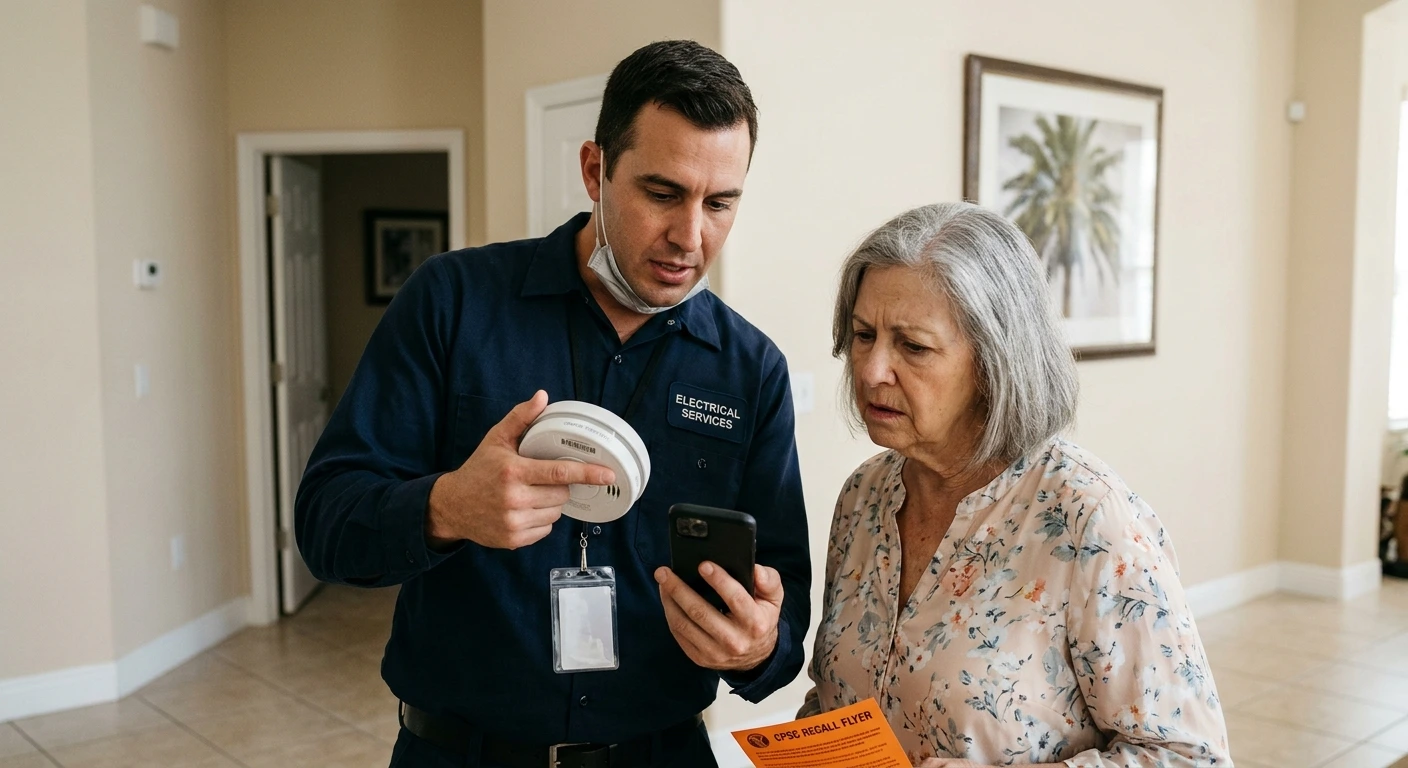
In our experience working across Central Florida homes, we regularly encounter detectors installed by homeowners that do not carry proper certification marks. The presence of a device on the ceiling does not mean the home is protected. A detector that cannot detect is worse than no detector at all, because it creates a false sense of security.
Who Is Affected by the CO Detector Recall?
Any homeowner, renter, landlord, or property manager who purchased a combination natural gas and carbon monoxide detector online between June 2024 and July 2026 should check their devices. The warning applies to anyone who owns a unit with model number KH158, regardless of the brand name on the housing.
The CPSC lists the following brand names associated with the affected model: ARIKON, ELECOIN, FLUNGSKY, HAOKESITE, Hembisen, JNHCD, KAKIMENT, KH Alert, KOABBIT, NICGOL, NORJAN, OUMEBIU, Sooguard, Vilfet, Vzmcov, WESHLGD, XLA Alert, and YOJOCK. If your detector carries any of these names and has a digital display with a SELF-TEST button, check the model number printed on the back of the unit or on the original product listing in your order history.
Property managers and landlords with multiple rental units face particular urgency. Florida landlords have a legal obligation to maintain habitable conditions, and a detector known to fail undermines that obligation. If a tenant experiences carbon monoxide exposure after the warning was published and the landlord did not act, the liability exposure is significant.
Why This Warning Is Different
Most product recalls involve a cooperative manufacturer. The company agrees to the recall, sets up a hotline, offers replacements or refunds, and works with the CPSC to notify consumers. This warning is different. The manufacturer has not agreed to any of those steps.
When a manufacturer refuses to cooperate, the CPSC issues a unilateral safety warning rather than a negotiated recall. The practical effect for consumers is that there is no replacement program, no refund mechanism, and no corporate entity accepting responsibility. Consumers absorb the full cost of replacing the device.
This matters because it changes the urgency of the response. In a standard recall, consumers can sometimes continue using the product until a replacement arrives. Here, the CPSC’s guidance is unambiguous: stop using the detector immediately and dispose of it. Do not wait for a remedy that is not coming.
The same day, August 20, 2026, the CPSC also issued a separate warning on TJTFJS 2-in-1 carbon monoxide and smoke detectors (model TJ00907) for the same fundamental problem: failure to detect. Two detector warnings in a single day from the same agency underscores how widespread the problem of uncertified or poorly manufactured detection devices has become in the online marketplace.
How Do You Know If Your CO Detector Is on the Recall List?
Identifying whether your detector is affected takes less than five minutes. The model number is the key identifier, not the brand name, because the same defective product was sold under 18 different labels.
| What to Check | Affected Product | Safe Replacement |
|---|---|---|
| Model number | KH158 | Any UL 2034 certified model |
| Display type | Digital with SELF-TEST button | Varies by brand |
| Indicator lights | POWER, FAULT, ALARM | UL mark on packaging and device |
| Power source | Plug-in only (no battery backup) | Battery backup required |
| Certification | No UL 2034 certification | UL 2034 (CO) or UL 2034 + UL 217 (combo) |
| Price range when sold | $13 to $140 | $25 to $60 for certified models |
Check the back of the detector for the model number. If you purchased online, search your Amazon, eBay, or AliExpress order history for any of the 18 brand names listed in the CPSC warning. If you cannot locate the model number and the detector is a plug-in unit with a digital display and a SELF-TEST button, err on the side of replacing it.
One issue we see regularly during residential electrician services calls is that homeowners install plug-in detectors without confirming they carry a recognized safety certification. The UL 2034 mark is the standard for carbon monoxide detectors in the United States. If a detector does not carry that mark, it has not been independently tested to confirm it will alarm at the carbon monoxide concentrations that cause harm.
If you are unsure whether your home’s smoke and carbon monoxide detectors are properly placed, certified, and functional, a professional electrical safety inspection can verify every device in your system. Super Fast Electric inspections start at $197 for standard homes, cover every outlet, panel, and safety device, and the report is delivered before the technician leaves the property.
What to Do If You Own a Recalled Detector
The CPSC’s guidance and standard safety practice call for a specific sequence of steps. Do not skip the replacement step and leave your home unprotected.
1. Unplug the detector immediately. Do not continue using it while waiting to purchase a replacement. A detector that cannot detect carbon monoxide provides zero protection.
2. Check every detector in your home. If you purchased one affected unit, you may have purchased multiples, especially if they were sold in multipacks.
3. Search your online order history. Look for any of the 18 brand names associated with model KH158 in your Amazon, eBay, or AliExpress purchase records.
4. Dispose of the affected detector. The CPSC recommends disposal rather than storage. A defective safety device should not remain available for accidental reinstallation.
5. Purchase a UL 2034 certified replacement. Look for the UL mark on the packaging and the device itself. Combination units that meet both UL 2034 (CO) and UL 217 (smoke) provide dual protection.
6. Install the replacement detector with battery backup. Plug-in-only detectors lose function during a power outage, which is exactly when generator-related CO risk is highest.
7. Test the new detector after installation. Press the test button and confirm the alarm sounds. Set a calendar reminder to test monthly and replace batteries annually.
Common Mistakes After a Detector Recall
The biggest mistake homeowners make after a detector recall is removing the affected unit and not replacing it. A home without a working carbon monoxide detector has no warning system for an odorless, colorless gas that kills more than 400 people in the United States every year, according to the Centers for Disease Control and Prevention.
The second most common mistake is replacing a recalled detector with another uncertified unit. Online marketplaces carry hundreds of detector listings, and not all of them meet U.S. safety standards. The KH158 recall demonstrates exactly this problem: a product that looks like a detector, functions like a detector in normal conditions, but fails at the moment detection matters most.
Third, homeowners often install CO detectors in the wrong locations. Carbon monoxide is roughly the same weight as air and distributes evenly throughout a room, so placement should follow manufacturer guidelines and local code. Detectors belong on every level of the home, outside each sleeping area, and at least 15 feet from fuel-burning appliances to avoid false alarms. A detector in the garage alone does not protect bedrooms on the second floor.
We also see homeowners treat detector maintenance as optional. A working detector today can fail in six months if batteries are not replaced, dust accumulates over the sensor, or the unit reaches the end of its rated lifespan. Most CO detectors have a lifespan of five to seven years. If your detector is older than that, replace it regardless of whether it appears on a recall list. For a deeper look at how your home’s electrical panel connects to your overall safety system, a panel inspection can identify issues that affect both power distribution and the circuits feeding your safety devices.
How Does Carbon Monoxide Risk Change During Hurricane Season?
Hurricane season creates conditions that dramatically increase carbon monoxide exposure risk for Central Florida homeowners. When power goes out, portable generators become the primary power source for refrigeration, lighting, and medical equipment. Every generator produces carbon monoxide in its exhaust, and the gas accumulates rapidly in enclosed or semi-enclosed spaces.
The CDC reports that carbon monoxide poisoning incidents spike after hurricanes and major storms. Generators operated inside garages (even with the door open), under carports, near open windows, or in screened-in lanais produce enough CO to reach dangerous concentrations within minutes. A working carbon monoxide detector is the only device that can alert occupants before symptoms like headache, dizziness, and confusion set in.
A plug-in-only detector adds another layer of risk during storm season. When the power goes out, the detector goes out with it. That is precisely the moment a homeowner is most likely to start a generator. Battery-backup detectors continue monitoring air quality during an outage, which is why every replacement unit should include backup power.
Proper surge protection for your home is a separate but related concern. When utility power is restored after an outage, the voltage surge can damage electronics and wiring. A whole-home surge protector, installed at the panel by a licensed electrician, reduces the risk of surge-related damage that can affect detector circuits and other safety-critical systems.
Frequently Asked Questions
How do I know if my carbon monoxide detector is UL 2034 certified?
Look for the UL mark printed on the device itself and on its original packaging. UL 2034 is the safety standard specifically for carbon monoxide detectors. If the mark is absent, the detector has not been independently verified to alarm at the carbon monoxide levels that cause harm. Purchase replacements only from established brands that display this certification.
Can I get a refund for the recalled KH158 detector?
As of August 2026, no. The manufacturer, Shenzhen Kanghua Shengshi Industrial Co., has not agreed to a recall or any consumer remedy. The CPSC cannot force a foreign manufacturer to issue refunds. Consumers should contact the retailer where they purchased the unit to request a return, though success depends on the retailer’s return policy and how long ago the purchase was made.
How many carbon monoxide detectors does my home need?
Install at least one CO detector on every level of the home, including the basement and attic if they contain fuel-burning appliances or are connected to living areas. Place a detector outside each sleeping area so the alarm can wake occupants. Homes with attached garages should have a detector near the garage entry point to the living space.
Should I replace a carbon monoxide detector that still beeps during testing?
The test button only confirms the alarm circuit works. It does not test the sensor’s ability to detect actual carbon monoxide. A detector can pass a button test and still fail to sense the gas. If your detector is older than seven years or appears on any recall list, replace it regardless of test results.
Do hardwired smoke detectors also detect carbon monoxide?
Not always. Hardwired smoke detectors and hardwired carbon monoxide detectors are separate devices unless specifically labeled as combination units. Check each detector’s label to confirm what it senses. Many homes have hardwired smoke detectors but no CO detection at all, leaving a gap that a standalone or combination CO detector must fill.
Is carbon monoxide heavier or lighter than air?
Carbon monoxide has nearly the same density as air, which means it does not rise or sink predictably. It mixes evenly throughout a room. This is why placement guidelines focus on proximity to sleeping areas and fuel-burning appliances rather than ceiling-versus-floor mounting height.
Next Steps
Check every carbon monoxide detector in your home against the CPSC warning list at cpsc.gov. Replace any unit that carries model number KH158 or lacks UL 2034 certification.
If your home has not had an electrical safety inspection, schedule one to verify that all detectors, circuits, and safety devices are functional and properly placed.
For Central Florida homeowners, Super Fast Electric serves 20 cities across the region with licensed Master Electricians, inspections starting at $197, and warranties up to 10 years.
A recalled detector is one risk eliminated. An overdue panel inspection, missing surge protection, and improperly placed safety devices are risks that remain until a licensed electrician checks the full system. Super Fast Electric has completed over 20,000 electrical service calls across Central Florida since 2017, with 800+ five-star Google reviews and a 100% satisfaction guarantee. Get your home inspected before hurricane season peaks.