

What Are Sustainable Energy Solutions for Your Home?
Sustainable energy solutions are electrical upgrades and installations that reduce a home or business’s energy consumption, lower utility costs, and decrease reliance on nonrenewable power sources. For most property owners, these solutions start with the electrical system itself: the lighting, the panel, the wiring, and the devices connected to all of it. A licensed electrician is the professional who installs, wires, and integrates the upgrades that make sustainable energy work in practice.
LED lighting: Replacing incandescent or fluorescent fixtures with LEDs reduces lighting energy use by up to 75%, according to the U.S. Department of Energy, and most upgrades pay for themselves within one to two years.
EV charger installation: A Level 2 home charger lets electric vehicle owners charge overnight using off-peak electricity rates, cutting per-mile fuel costs by roughly 50% or more compared to gasoline.
Smart controls and panel upgrades: Programmable lighting, occupancy sensors, and modern electrical panels give homeowners real-time control over where energy goes, eliminating the waste that outdated systems create.
What Sustainable Energy Upgrades Does an Electrician Install?
Most homeowners associate sustainable energy with solar panels or wind turbines, but the upgrades that deliver the fastest return on investment are electrical: lighting, vehicle charging infrastructure, panel capacity, surge protection, and automation. These are the upgrades a licensed electrician handles, and they are the upgrades that reduce a home’s energy footprint without requiring a full renewable-energy system.
The most common sustainable energy upgrades we install across Central Florida fall into six categories.
LED lighting conversions. Replacing outdated bulbs and fixtures with LEDs in every room, including exterior and landscape lighting. This single change often produces the largest immediate drop in a home’s electricity bill.
EV charger installation. Wiring and installing a Level 2 (240V) charging station in a garage or carport, including the dedicated circuit and panel capacity required to support it safely.
Smart lighting and home automation. Installing smart switches, dimmers, occupancy sensors, and app-controlled lighting systems that eliminate wasted energy from lights left on in empty rooms.
Electrical panel upgrades. Replacing an outdated or undersized panel with a modern unit that supports today’s load demands, including EV chargers, heat pumps, and high-efficiency appliances, without overloading circuits.
Whole-home surge protection. Installing layered surge protection at the panel and at individual circuits to protect energy-efficient equipment, which is more sensitive to voltage spikes than older devices.
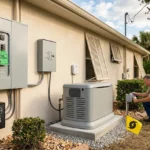
Backup generator systems. Installing a standby generator (such as a Generac unit) that keeps a home powered during outages, preserving the investment in perishable food, medical equipment, and home office productivity that grid failures destroy.
For a full overview of the electrical services that support these upgrades, visit our electrical services page.
How LED Lighting Reduces Energy Costs
LED lighting is the single most cost-effective sustainable energy upgrade for the majority of homes and businesses. The U.S. Department of Energy reports that LED bulbs use up to 75% less energy than incandescent bulbs and last 25 times longer. For the average homeowner, that translates to roughly $225 per year in savings on lighting costs alone.
The upgrade is straightforward, but doing it right matters. Swapping bulbs one at a time at the hardware store handles part of the job, but a full LED conversion includes replacing outdated fixtures, ensuring dimmer switches are LED-compatible, and verifying that the wiring and circuit load can handle the new configuration without flickering or premature failure.
In our experience installing LED systems across Central Florida homes and commercial properties, the most common issue we see is flickering caused by incompatible dimmer switches or loose connections in older wiring. If you are experiencing that problem, our guide on common LED light problems and how to fix them breaks down the root causes and solutions.
For commercial properties, the savings scale dramatically. Businesses that upgrade warehouse, office, or parking lot lighting to LED systems routinely see a 50% to 70% reduction in lighting costs, with most projects paying for themselves within two to three years. Super Fast Electric designs custom lighting layouts for commercial spaces that maximize coverage while minimizing fixture count and energy draw.
Wondering whether smart LED bulbs add to your electricity bill? Our breakdown of whether smart lights use more electricity covers the real numbers.
Ready to cut your energy costs with upgrades that actually pay for themselves? Super Fast Electric installs LED lighting systems, EV chargers, smart controls, and panel upgrades for homes and businesses across 20 Central Florida cities. Our licensed electricians handle the wiring, permitting, and integration so the job is done safely and to code.
EV Charger Installation and Home Energy
Electric vehicle adoption in the United States continues to accelerate. The U.S. Department of Energy estimates that charging an EV at home costs roughly half of what it costs to fuel a comparable gasoline vehicle per mile. But a home EV charger is an electrical installation first, and a sustainability upgrade second. The charger itself is the simple part. The electrical work behind it is what determines whether the system is safe, efficient, and up to code.
A Level 2 charger requires a dedicated 240-volt circuit, typically 40 to 50 amps, wired from the electrical panel to the charging location. For many homes, especially those with older panels running at or near capacity, this means the panel needs to be upgraded before the charger can be installed. One question we hear constantly from homeowners considering an EV charger is whether their current panel can handle the additional load. The answer depends on the panel’s amperage rating, the existing circuit count, and the total load already drawing from it.
Super Fast Electric performs a load calculation before every EV charger installation to determine the right charger amperage and whether the panel can support it. This step prevents the overloaded-circuit problems that lead to tripped breakers, voltage drops, and potential fire hazards. We install EV chargers across Central Florida, including dedicated installations in Lake Mary, Oviedo, and St. Cloud.
How Smart Lighting and Automation Save Energy
Smart lighting systems give homeowners control over exactly when, where, and how much energy their lights consume. The technology ranges from simple app-controlled smart bulbs to fully integrated systems with occupancy sensors, daylight harvesting, and scheduled automation that adjusts lighting room by room throughout the day.
The energy savings come from eliminating waste. A traditional lighting setup relies entirely on the homeowner remembering to flip a switch. Smart systems automate that decision: lights turn off when a room is empty, dim when natural light is sufficient, and run on schedules that align with the household’s actual patterns.
Across the homes we service, the biggest misconception we encounter is that smart lighting is complicated or expensive to install. In practice, a smart lighting setup starts with replacing standard switches with smart switches or dimmers and connecting them to a hub or Wi-Fi network. The electrician’s role is ensuring the wiring supports the new switches, the neutral wire is present (many smart switches require one), and the system integrates cleanly with the home’s existing electrical infrastructure. For a deeper look at how these systems work, see our guide on how smart light bulbs work.
Surge Protection and Electrical Panel Upgrades
Energy-efficient equipment is more sensitive to voltage spikes than older devices. LED drivers, EV charger electronics, smart home hubs, and modern HVAC systems all contain circuit boards that a single surge can destroy. Surge protection is the upgrade that protects every other sustainable energy investment in the home.
Central Florida is one of the highest lightning-strike regions in the world, which makes surge protection especially critical here. Electrical engineers recommend layering surge protection across four levels: at the utility meter, at the main panel, at subpanels or dedicated circuits, and at individual devices. Most homes have, at best, a power strip at the computer. That is not surge protection. Our full breakdown of what a surge protector is and why you need one explains the difference between real protection and the false sense of security a power strip provides.
Panel upgrades go hand in hand with surge protection. An outdated 100-amp or 150-amp panel cannot safely support a modern energy-efficient home that includes an EV charger, a heat pump, LED lighting with smart controls, and high-draw kitchen appliances. Upgrading to a 200-amp panel with integrated surge protection gives the home the capacity it needs today and the headroom for future upgrades.
If your panel is showing warning signs like tripped breakers, warm spots, or a burning smell, our guide on the top 5 warning signs your home needs electrical panel repair covers what to watch for.
Comparing Sustainable Energy Upgrades
The table below compares the most common electrician-installed sustainable energy upgrades by estimated savings, cost, and who benefits most.
| Upgrade | Energy Savings | Estimated Cost | Payback Period | Best For |
|---|---|---|---|---|
| LED Lighting | Up to 75% | $200 to $2,000+ | 1 to 2 years | Every home and business |
| EV Charger (L2) | ~50% per mile vs gas | $1,200 to $2,500 | 2 to 4 years | EV owners |
| Smart Lighting | 10% to 30% | $500 to $3,000 | 2 to 3 years | Homes with many fixtures |
| Surge Protection | Protects equipment | $300 to $1,000 | Immediate (loss prevention) | Lightning-prone areas |
| Panel Upgrade | Enables all upgrades | $2,000 to $4,000 | Varies by load | Older homes, 100A panels |
| Standby Generator | Prevents outage losses | $12,500 to $16,000 | First major outage | Storm-prone regions |
How to Choose the Right Electrician for Energy Upgrades
Not every electrician has experience with sustainable energy installations. EV charger wiring, smart home integration, and layered surge protection require specific knowledge beyond standard residential electrical work. Choosing the wrong contractor can result in code violations, warranty issues, and systems that underperform or fail prematurely.
Here is what to verify before hiring an electrician for energy-efficiency upgrades.
1. Active state license. In Florida, electrical contractors must hold a valid EC or ER license. Ask for the number and verify it through the Florida DBPR portal.
2. Experience with the specific upgrade. A general electrician may not have installed an EV charger or configured a whole-home surge protection system. Ask how many of the specific installation you need they have completed.
3. Load calculation before quoting. Any electrician who quotes an EV charger or panel upgrade without first performing a load calculation is skipping the step that determines whether the installation is safe.
4. Warranty and satisfaction guarantee. Reputable contractors stand behind their work. Super Fast Electric offers a 100% satisfaction guarantee with warranties ranging from 1 to 10 years depending on the scope of the project.
5. Reviews and track record. Look for electricians with a high volume of verified reviews. A company with 800+ five-star Google reviews and a 4.9 rating, like Super Fast Electric, has a track record that a handful of testimonials cannot match.
Providers often come to us after a bad experience with a previous contractor who cut corners on wiring or installed a charger without checking whether the panel could handle it. The fix for a botched installation almost always costs more than doing it correctly the first time.
How Backup Generators Fit Into Sustainable Energy
A standby generator may not seem like a sustainable energy solution at first glance, but it protects every other sustainable investment in the home. An extended power outage destroys perishable food, disrupts medical equipment, shuts down home offices, and can damage HVAC systems that restart under abnormal conditions. A generator prevents those losses, which represent both financial waste and resource waste.
As a Generac dealer, Super Fast Electric installs whole-home standby generators across Central Florida. A typical Generac installation for a standard home runs between $12,500 and $16,000 after installation, with the final cost determined by the generator size (based on a load calculation), the fuel type, and the number of electrical panels. For a full breakdown of pricing factors, see our guide on the full Generac generator cost after install.
The installation timeline from initial call to completed install runs six to twelve weeks. Super Fast Electric handles permitting in-house and coordinates directly with Duke Energy and other utility providers. Financing options are available.
Frequently Asked Questions
What are sustainable energy solutions for a home?
Sustainable energy solutions for a home are electrical upgrades that reduce energy consumption and lower utility bills. Common examples include LED lighting conversions, EV charger installation, smart lighting systems, electrical panel upgrades, whole-home surge protection, and standby generator installation.
How much do sustainable energy upgrades cost?
Costs vary by upgrade. LED lighting conversions start as low as $200 for a small home. EV chargers typically run $1,200 to $2,500 installed. Panel upgrades range from $2,000 to $4,000. Standby generators cost $12,500 to $16,000 after installation. Most LED and smart lighting upgrades pay for themselves within one to three years.
Do I need a panel upgrade for an EV charger?
It depends on your current panel’s amperage and load. A Level 2 EV charger requires a dedicated 240-volt, 40 to 50 amp circuit. If your panel is already near capacity, an upgrade to a 200-amp panel may be necessary. A load calculation performed before installation determines whether the existing panel can support the charger safely.
Why is surge protection important for energy-efficient homes?
Energy-efficient devices like LED drivers, EV charger electronics, and smart home controllers contain sensitive circuit boards that voltage spikes can destroy. Central Florida’s high lightning activity makes layered surge protection essential. A whole-home surge protector at the panel is the minimum recommended level of protection.
Can an electrician install solar panels?
Solar panel installation is typically handled by specialized solar contractors, though a licensed electrician performs the electrical tie-in to the home’s panel and ensures the wiring meets code. An electrician can also install the supporting infrastructure, including panel upgrades, battery backup wiring, and surge protection for solar inverters.
What is the fastest sustainable energy upgrade to install?
LED lighting conversions are the fastest. A licensed electrician can convert an entire home’s lighting to LED in a single visit, often in a few hours. The energy savings begin immediately, and the upgrade pays for itself within one to two years for most homes.
How do I know which energy upgrades my home needs?
A home electrical safety inspection identifies which systems are outdated, overloaded, or wasting energy. Super Fast Electric offers inspections starting at $197 that cover outlets, panels, GFCI and AFCI testing, surge protection, grounding, and smoke detectors. The inspection report prioritizes which upgrades will deliver the greatest return.
Stop overpaying for energy with an outdated electrical system. Super Fast Electric has completed over 30,000 residential service calls across 20 Central Florida cities since 2017, earning 800+ five-star Google reviews and a 4.9-star rating. From LED conversions to EV chargers to full panel upgrades, our licensed electricians handle every sustainable energy upgrade safely and to code. Inspections start at $197.