
What Electrical Work Should You Do Before Hurricane Season?
Hurricane electrical preparation means inspecting, upgrading, and protecting your home’s electrical system before a named storm arrives. As of August 2026, NOAA’s forecast calls for 8 to 14 named storms in the Atlantic this season, with 3 to 6 becoming hurricanes and peak activity running from mid-August through late October. The time to address your panel, generator, surge protection, and outdoor outlets is now, before a storm watch fills every electrician’s schedule.
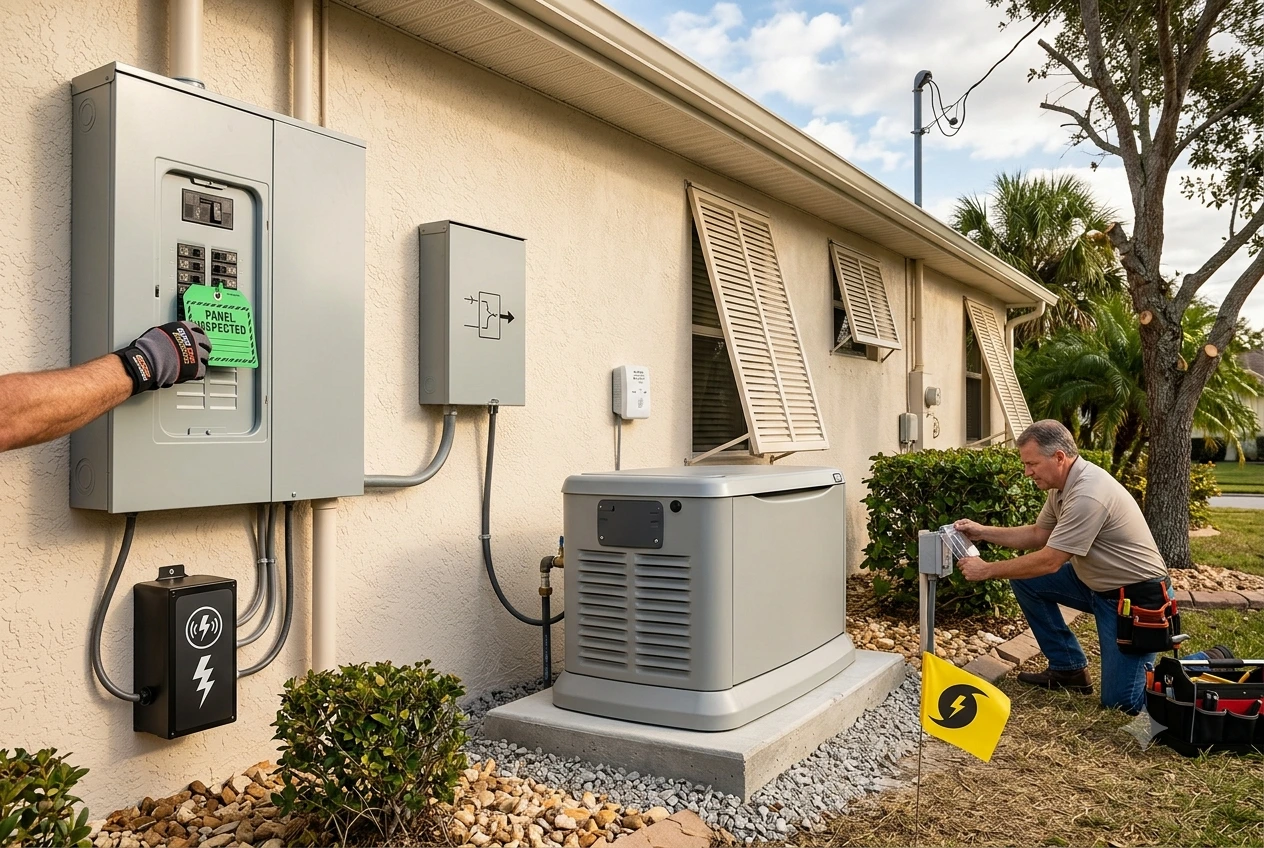
Electrical panel: Inspect for corrosion, loose breakers, and burn marks. An outdated or damaged panel is a fire risk during the power surges that follow outage restoration.
Surge protection: Central Florida averages more lightning strikes per square mile than anywhere else in the United States. A whole-home surge protector at the panel is the minimum recommended level of protection before storm season.
Standby generator: A properly installed standby generator with a transfer switch keeps your home powered during extended outages. Installation runs six to twelve weeks, so ordering now is the last window before peak season.
Why August Starts the Clock
The Atlantic hurricane season runs June through November, but the historical peak falls between mid-August and late October. That is when warm ocean temperatures and favorable atmospheric conditions produce the strongest and most frequent storms. For Central Florida homeowners, August is the last practical window to complete electrical work that requires permitting, parts ordering, or multi-day installation. Once a tropical system appears on the forecast, electrician schedules fill within days and permit offices slow down.
NOAA’s 2026 Atlantic Hurricane Season Outlook projects a below-normal season with 8 to 14 named storms, 3 to 6 hurricanes, and 1 to 3 major hurricanes (Category 3 or higher). A below-normal forecast does not mean a safe season. Central Florida saw direct impacts from Hurricanes Debby, Helene, and Milton in 2024 alone, with Duke Energy Florida spending hundreds of millions on storm cost recovery that was passed through to customer bills. One storm is all it takes.
In our experience servicing homes across 20 Central Florida cities, the homeowners who come through hurricane season with the least damage and the fastest recovery are the ones who addressed their electrical system in July or early August, not the ones who called us after the first storm watch was issued.
Inspect Your Electrical Panel
Your electrical panel is the first thing that needs to survive a hurricane and the surges that follow. Power restoration after an outage sends voltage spikes through the grid that can trip breakers, damage wiring, and in older panels, start fires. An inspection before storm season catches the problems that turn a survivable outage into an electrical emergency.
Open the panel cover and look for these warning signs.
Rust or corrosion on breakers or bus bars. Moisture intrusion from a previous storm or a roof leak weakens connections and increases arc-fault risk during power surges.
Burn marks or discoloration. These indicate a breaker or connection that has been overheating, which a restoration surge will make worse.
Breakers that do not switch cleanly. A breaker that sticks, buzzes, or feels loose may not trip when it needs to during a surge, which removes the safety mechanism designed to prevent a fire.
A panel rated at 100 amps or less. Older homes with 100-amp panels are already running near capacity with modern appliances. Adding a generator or recovering from a surge on an overloaded panel creates a serious hazard.
Super Fast Electric offers pre-hurricane electrical inspections starting at $197 that cover your panel, outlets, GFCI and AFCI protection, surge protection, grounding, and smoke detectors. The inspection report tells you exactly what needs attention before storm season. For a deeper look at how fuses and breakers protect your home, see our guide on understanding electrical safety and circuit protection.
Install Whole-Home Surge Protection
Lightning is not the only source of surges during a hurricane. Power grid disruptions, transformer failures, and the restoration process itself all produce voltage spikes that travel through your wiring and destroy anything with a circuit board. LED drivers, smart home systems, EV charger electronics, HVAC controllers, and refrigerator compressors are all vulnerable.
Central Florida sits in the lightning capital of the United States, and storm season amplifies that risk. A whole-home surge protector installed at the main panel is the baseline level of protection. Layered protection, adding surge devices at subpanels and dedicated circuits, covers the equipment that matters most. A power strip at the desk is not surge protection. Our full breakdown of what a surge protector is and why you need one explains the difference.
The cost for whole-home surge protection ranges from $300 to $1,000 depending on the panel configuration and the number of circuits covered. For a home with a modern 200-amp panel, installation typically takes half a day. The investment pays for itself the first time it prevents a $3,000 HVAC repair or a $1,200 refrigerator replacement.
Peak hurricane season starts this month. If your panel has not been inspected, your surge protection is limited to power strips, or your generator still is not installed, now is the window to fix it. Super Fast Electric services 20 Central Florida cities with licensed electricians who handle storm prep every summer. Inspections start at $197.
Generator Installation and Transfer Switches
A standby generator with a properly installed transfer switch is the only way to keep a home fully powered during an extended outage. Portable generators can bridge a short gap, but they introduce carbon monoxide risk, require manual fueling, and cannot power a full house. A permanently installed standby generator, such as a Generac unit, starts automatically when utility power drops and runs as long as it has fuel.
As a Generac dealer, Super Fast Electric installs whole-home standby generators across Central Florida. A typical installation runs $12,500 to $16,000 depending on the generator size, fuel type, and the number of panels. The installation timeline from initial call to completed install is six to twelve weeks, which means ordering now puts the completion date in September or October, right at the height of hurricane season. Waiting until a storm is forecast cuts that window to zero. For a full breakdown of what drives the cost, see our guide on the full Generac generator cost after install.
The transfer switch is the critical safety component. It isolates your home’s electrical system from the utility grid when the generator is running, which prevents backfeed that can electrocute utility workers and damage equipment on the grid. A generator installed without a code-compliant transfer switch is both illegal and dangerous. Super Fast Electric handles permitting for all generator installations in-house and coordinates directly with Duke Energy and other utility providers.
Outdoor Outlets, GFCI, and Flood Risk
Outdoor electrical outlets, pool equipment circuits, and low-mounted receptacles are the most vulnerable points in your electrical system during a hurricane. Standing water, wind-driven rain, and debris can compromise these connections and create shock and fire hazards that persist after the storm passes.
Every outdoor outlet and any receptacle within six feet of a water source should be protected by a ground-fault circuit interrupter (GFCI). Florida building code requires GFCI protection in kitchens, bathrooms, garages, and all outdoor locations, but many older homes were built before these requirements and have never been updated. A pre-season GFCI check confirms that every protected outlet trips correctly when tested.
After a storm, never touch an outdoor outlet, a downed wire, or any electrical equipment that is standing in water. Wait for a licensed electrician to inspect and clear the system before restoring power to any circuit that may have been compromised. If your outdoor outlets are already giving you trouble, our guide on why your outdoor outlet is not working covers the most common causes and fixes.
Post-Storm Electrical Safety
The danger does not end when the wind stops. Post-storm electrical hazards kill and injure people every hurricane season, and most of those incidents are preventable.
Do not enter a flooded home until the power is confirmed off at the main breaker or by the utility. Water and electricity in combination are lethal, and a circuit that appears dead may still be energized if the breaker did not trip.
Stay away from downed power lines. A downed line can energize the ground in a wide radius around it. Assume every downed line is live.
Have an electrician inspect before restoring power. After any flooding or significant wind damage, a licensed electrician should inspect the panel, wiring, and outdoor connections before you flip the main breaker back on.
Run portable generators outdoors only. Carbon monoxide from a generator running in a garage, even with the door open, can reach fatal levels in minutes. The CDC reports that generator-related carbon monoxide poisoning kills dozens of Americans in the aftermath of major storms every year.
The most common post-storm call we get is from homeowners who flipped their main breaker back on after a flood without having the system inspected first. In some cases the panel and wiring survived fine. In others, moisture had corroded connections and the restoration surge tripped breakers, damaged appliances, or created arc-fault conditions. The inspection costs far less than the damage it prevents.
Hurricane Electrical Prep Checklist
| Task | Why It Matters | Timeline |
|---|---|---|
| Panel inspection | Catches corrosion, loose breakers, and overloaded circuits before a surge | Schedule now; 1 to 2 hours |
| Whole-home surge protector | Protects all electronics from grid surges during outages and restoration | Half-day install |
| Standby generator + transfer switch | Keeps home powered during extended outages safely and to code | 6 to 12 weeks lead time |
| GFCI testing on all outdoor outlets | Prevents shock and fire from water intrusion during and after storms | 30 minutes; DIY or electrician |
| Tree trimming near service entrance | Prevents branch damage to the meter, mast, or overhead service drop | Schedule with a professional |
| Secure or elevate outdoor electrical equipment | Reduces flood damage to pool pumps, outdoor panels, and EV chargers | 1 to 2 hours with an electrician |
Frequently Asked Questions
How do I prepare my electrical system for a hurricane?
Start with a panel inspection to check for corrosion, loose breakers, and overloaded circuits. Install whole-home surge protection at the main panel. Test all GFCI outlets. If you need a standby generator, order it now because installation takes six to twelve weeks. Complete all electrical work before a storm watch is issued.
How much does a whole-home surge protector cost?
A whole-home surge protector installed at the main panel typically costs $300 to $1,000 in Central Florida, depending on the panel configuration and the number of circuits covered. Installation usually takes half a day. The investment prevents thousands of dollars in appliance and electronics damage from a single surge event.
Can I install a generator after a hurricane watch is issued?
In practice, no. A standby generator installation requires a permit, a load calculation, equipment delivery, and electrical work that totals six to twelve weeks from start to finish. Once a storm is forecast, electrician schedules and permit offices are overloaded. Order in August to have it ready by peak season.
Should I turn off my main breaker before a hurricane?
If evacuation is ordered or flooding is expected, turning off the main breaker protects your electrical system from surge damage during restoration. Label the breaker clearly so you or an electrician can restore power safely after the storm. Never flip the main breaker back on in a flooded home without an inspection.
What should I check electrically after a hurricane?
Do not restore power until a licensed electrician inspects the panel, wiring, and outdoor connections for water damage, corrosion, or debris impact. Stay away from downed power lines. Do not operate any electrical equipment that has been submerged. Report downed lines to your utility immediately.
Is GFCI protection required on outdoor outlets in Florida?
Yes. Florida building code requires GFCI protection on all outdoor receptacles, garage outlets, kitchen countertop outlets, bathroom outlets, and any receptacle within six feet of a water source. Many older homes were built before these requirements and have never been updated. Test every GFCI outlet before storm season.
Next Steps
Need surge protection? See our full guide on what a surge protector is and why you need one.
Considering a generator? Read our breakdown of the full Generac generator cost after install.
Outdoor outlet issues? Our guide on why your outdoor outlet is not working covers the most common problems.
Ready to get your home storm-ready? Schedule a pre-hurricane electrical inspection now, before the first named storm fills every electrician’s calendar.
Hurricane season peaks in August and September. Super Fast Electric has completed over 30,000 residential service calls across 20 Central Florida cities since 2017, earning 800+ five-star Google reviews and a 4.9-star rating. From panel inspections to generator installations to whole-home surge protection, our licensed electricians handle every piece of storm prep safely and to code. Inspections start at $197. Do not wait for the forecast.